Chemical peels in Thane use acid-based solutions to exfoliate the skin, and the three most commonly compared options, glycolic, salicylic, and TCA (trichloroacetic acid), each work at a different depth and suit different skin concerns, so choosing the right one matters more than assuming any single peel works universally. Glycolic peels suit dullness and mild texture concerns, salicylic peels are generally preferred for oily and acne-prone skin, and TCA peels address deeper pigmentation and more significant texture issues, but come with more downtime. This guide compares all three in detail, covering how each works, what they treat best, cost, and what recovery actually looks like.
A chemical peel is an exfoliating treatment that uses an acid solution applied to the skin to remove damaged or dull surface cells, encouraging the body’s natural skin renewal treatment process to generate fresher, more even-toned skin underneath. Peels are broadly categorized by depth, superficial peels affect only the outermost skin layer, medium-depth peels reach further into the skin, and deep peels penetrate significantly further, though deep peels are less commonly used today given the availability of gentler, equally effective alternatives.
The depth and specific acid used in a chemical peel determine both how effective it is for a particular concern and how much downtime it involves, which is why glycolic, salicylic, and TCA peels aren’t interchangeable despite all falling under the same general “chemical peel” category. Understanding these differences is the foundation for choosing a peel that actually matches your skin concern rather than picking based on price or general availability alone.
Glycolic acid is an AHA (alpha hydroxy acid) derived from sugarcane, and it’s one of the most commonly used ingredients in superficial peel treatments due to its relatively small molecular size, which allows it to penetrate the skin’s surface effectively and exfoliate efficiently. Glycolic peel treatment in Thane is typically recommended for dullness, uneven texture, mild sun damage, and early signs of fine lines, since it works primarily at the skin’s surface.
Glycolic peels are usually done in a series, spaced two to four weeks apart, with concentration gradually increased as the skin builds tolerance, rather than starting at the highest strength immediately.
Salicylic acid is a BHA (beta hydroxy acid), and unlike glycolic acid, it’s oil-soluble, which means it can penetrate directly into oil-clogged pores rather than working only on the skin’s surface. This makes salicylic acid peel treatment in Thane a commonly preferred option for oily, acne-prone, and congested skin, since it can address both surface dullness and deeper pore congestion simultaneously.
Salicylic acid’s oil-soluble nature is what sets it apart from glycolic acid specifically, allowing it to clear congestion from within the pore rather than simply exfoliating the skin’s outer surface, which is why it’s frequently the first choice for an acne scar treatment plan involving chemical peels. For related information on managing active breakouts before scar treatment begins, our acne treatment page covers the broader treatment approach.
TCA (trichloroacetic acid) peels work at a deeper level than glycolic or salicylic acid peels, classifying them as a medium-depth peel option rather than a superficial peel. TCA peel treatment in Thane is generally reserved for more significant concerns, deeper pigmentation, more noticeable textural irregularities, and certain types of acne scarring, that haven’t responded adequately to superficial peel options.
Because TCA works at a medium depth, it involves noticeably more downtime than glycolic or salicylic peels, and it requires more careful patient selection, since it’s not generally recommended for very sensitive skin or without a proper skin assessment beforehand.
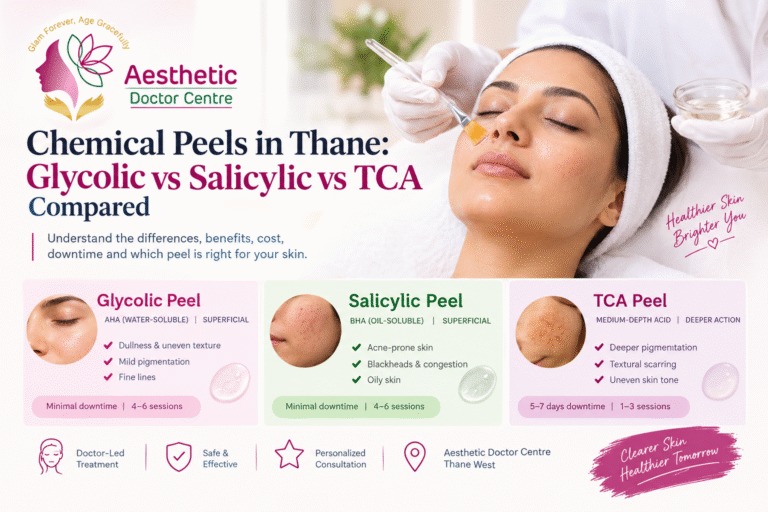
Factor | Glycolic Peel | Salicylic Acid Peel | TCA Peel |
Acid type | AHA (water-soluble) | BHA (oil-soluble) | Medium-depth acid |
Peel depth | Superficial | Superficial | Medium-depth |
Best suited for | Dullness, mild texture, fine lines | Oily/acne-prone skin, congestion | Deeper pigmentation, textural scarring |
Downtime | Minimal, 1–2 days | Minimal, 1–2 days | 5–7 days visible peeling |
Sessions typically needed | Series of 4–6 | Series of 4–6 | 1–3, spaced further apart |
Suitable for sensitive skin | Generally yes, at low concentration | Generally yes | Requires careful assessment |
This comparison highlights why matching the peel to the concern matters more than assuming a “stronger” peel is automatically the better choice, since TCA’s deeper action isn’t necessary, or even appropriate, for concerns like mild dullness that respond well to a gentler glycolic or salicylic approach.
Some skin peeling treatment protocols in Thane combine AHA and BHA ingredients, glycolic and salicylic acid together, in a single formulation to address both surface dullness and pore congestion simultaneously. This combination approach can be particularly useful for combination skin, which may experience both dry, dull patches and oily, congested areas at the same time.
An AHA BHA peel combination is generally still considered a superficial peel in terms of overall depth and downtime, making it a versatile option for people who don’t fit neatly into either a purely dry/dull or purely oily/congested category.
Pigmentation removal is one of the most common reasons people seek out chemical peels, though the right peel depends on the type and depth of pigmentation involved. Superficial pigmentation, like mild sun spots or recent acne marks, often responds well to glycolic or salicylic peels, while deeper, more stubborn pigmentation may require a TCA peel or a series of treatments combined with other approaches. Melasma, in particular, needs a cautious approach regardless of which peel is used, since aggressive treatment can worsen this specific type of pigmentation. Our pigmentation treatment page explains these distinctions in more detail.
Pigmentation removal is one of the most common reasons people seek out chemical peels, though the right peel depends on the type and depth of pigmentation involved. Superficial pigmentation, like mild sun spots or recent acne marks, often responds well to glycolic or salicylic peels, while deeper, more stubborn pigmentation may require a TCA peel or a series of treatments combined with other approaches. Melasma, in particular, needs a cautious approach regardless of which peel is used, since aggressive treatment can worsen this specific type of pigmentation. Our pigmentation treatment page explains these distinctions in more detail.
Chemical peel cost in Thane varies based on the specific type of peel used, the treatment area, and whether it’s a single session or part of a recommended series. Superficial peels like glycolic and salicylic acid are generally priced per session and often sold as a package for a full recommended course, while TCA peels, given their deeper action and typically fewer required sessions, may be priced differently per treatment.
It’s worth requesting a written cost breakdown that specifies the exact peel type, expected number of sessions, and what’s included, since comparing “chemical peel” pricing across clinics without knowing the specific acid and concentration used can be misleading.
Peel downtime differs significantly between superficial and medium-depth options, and setting the right expectations beforehand helps avoid surprises.
Glycolic and salicylic peels typically involve mild redness and light, often barely visible flaking for one to two days, making them practical for people who can’t take extended time away from work or social commitments.
TCA peels involve more noticeable peeling, typically lasting five to seven days, during which the skin may appear visibly flaky or tight before the new skin underneath is revealed. Planning a TCA peel around a period without major social commitments is generally advisable given this more pronounced downtime.
Post-peel care plays a significant role in how well your skin heals and how long results last, regardless of which type of peel you choose.
Certain skin conditions and circumstances call for extra caution before undergoing chemical peel treatment. Active, inflamed acne, certain skin infections, and very sensitive or compromised skin barriers may not be suitable for peel treatment until the underlying issue is addressed first. Pregnant or breastfeeding individuals should discuss suitability with their doctor before certain peel ingredients are used, since not all acids are considered appropriate during this time.
According to guidance from the Indian Association of Dermatologists, Venereologists and Leprologists (IADVL), chemical peel procedures should be performed by or under the supervision of appropriately trained medical professionals who can assess suitability and select the correct peel type and concentration for each individual.
When choosing where to get chemical peels in Thane, confirm that the clinic performs a proper skin assessment before recommending a specific peel type and concentration, rather than offering a single standard peel to every patient regardless of their concern. A knowledgeable specialist will also explain realistic downtime and the number of sessions likely needed for your specific goal, whether that’s dullness, acne, or pigmentation.
Proper preparation, sometimes called “prepping” the skin, can improve how evenly a peel is absorbed and reduce the risk of complications, particularly for medium-depth options like TCA.
A few misconceptions persist around chemical peels, and clearing them up can help set more accurate expectations before treatment.
Myth: All chemical peels involve significant visible peeling. This is true mainly for medium-depth options like TCA. Superficial peels like glycolic and salicylic acid often involve only light, barely noticeable flaking, not the dramatic peeling people sometimes picture.
Myth: A stronger peel always gives better results. Matching the peel type and depth to your specific concern matters more than choosing the strongest option available. Using an unnecessarily aggressive peel for a mild concern increases downtime and risk without proportional benefit.
Myth: Chemical peels thin out the skin over time. When performed correctly and at an appropriate frequency, chemical peels support skin renewal treatment and collagen stimulation rather than thinning skin. Problems generally arise only from over-treatment or peels performed too frequently without proper professional guidance.
Myth: You can safely do a TCA-strength peel at home. Medium-depth peels like TCA require professional application and monitoring, since incorrect concentration or technique carries a genuine risk of burns, uneven results, or scarring. This is not a treatment suited to at-home use.
Myth: Peels work the same for every skin tone. Peel selection and concentration need to account for skin tone, since certain aggressive treatments carry a higher risk of post-inflammatory pigmentation in darker skin tones if not carefully managed by an experienced professional.
Which chemical peel is best for acne-prone skin? Salicylic acid peels are generally preferred for acne-prone skin because the acid is oil-soluble and can penetrate clogged pores more effectively than glycolic acid, helping reduce congestion and inflammation.
Is TCA peel more effective than glycolic peel? TCA peels work at a deeper level and can address more significant pigmentation or textural concerns, but this comes with more downtime. Glycolic peels are often sufficient, and more practical, for milder dullness or texture concerns.
How many sessions of chemical peel are needed to see results? Superficial peels like glycolic and salicylic acid typically require a series of four to six sessions, spaced two to four weeks apart, while TCA peels often need fewer sessions, sometimes just one to three, given their deeper action.
Can chemical peels be combined with other treatments? Yes, peels are often combined with treatments like microneedling or laser resurfacing as part of a broader skin renewal treatment plan, though timing and spacing between different treatments should be guided by a specialist.
How much does a chemical peel cost in Thane? Cost depends on the specific peel type, concentration, and number of sessions recommended, so it’s best to request an itemized estimate after a skin assessment rather than comparing generic advertised prices.
Is chemical peel downtime the same for every type of peel? No, superficial peels like glycolic and salicylic acid typically involve only one to two days of mild redness or flaking, while TCA peels generally involve five to seven days of more visible peeling.
Can chemical peels help remove acne scars completely? Chemical peels can meaningfully improve superficial, discoloration-type acne marks, but deeper, textured scarring often requires a combination approach involving other treatments alongside peels for the best result.
This article is for general educational purposes and does not replace personalised medical advice. Please consult a qualified dermatologist to determine the right chemical peel type and concentration for your specific skin concern.
Not sure which chemical peel is right for you? Book a consultation with Dr. Jyoti Ghindani at Aesthetic Doctor Centre to find the option best suited to your skin.
Book your Appointment