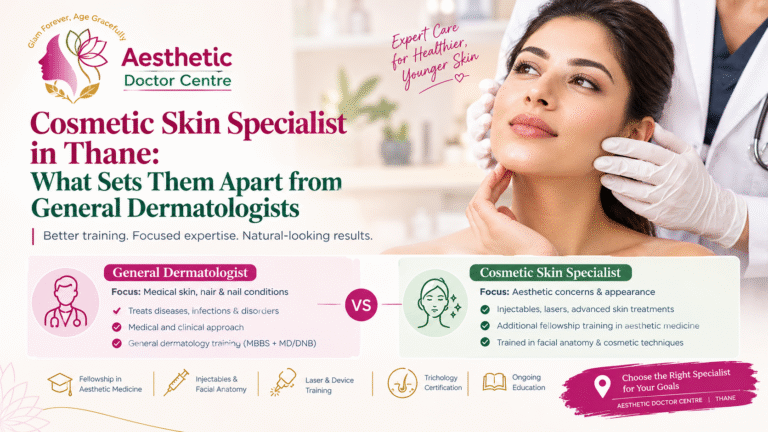
A cosmetic skin specialist in Thane differs from a general dermatologist primarily in focus and additional training, general dermatology centers on diagnosing and treating medical skin conditions, while a cosmetic skin specialist typically holds additional fellowship training in aesthetic medicine and focuses specifically on non-invasive procedures like injectables, lasers, and advanced skin treatments aimed at appearance rather than disease.
Understanding this distinction matters because choosing the right type of specialist for your specific concern, medical versus cosmetic, directly affects both the quality of care and the outcome you can expect. This guide explains exactly what sets a cosmetic skin specialist apart, what additional training and credentials to look for, and how to choose the right aesthetic physician in Thane for your specific goals.
General dermatology is a medical specialty focused on diagnosing and treating skin, hair, and nail conditions, including diseases, infections, and disorders, while cosmetic dermatology is a more focused area centered specifically on aesthetic concerns, wrinkles, volume loss, pigmentation, and skin texture, using non-invasive procedures rather than treating underlying medical pathology.
Many practitioners work across both areas, but a cosmetic dermatology expert in Thane typically has additional, dedicated training specifically in aesthetic treatment planning, facial anatomy for injectables, and advanced device-based procedures, beyond what general dermatology training alone covers.
This distinction isn’t about one being more qualified than the other; it reflects genuinely different skill sets. A doctor skilled at diagnosing complex skin diseases isn’t automatically equally skilled at precise facial injectable placement, and the reverse is also true, which is why matching your specific need, medical or cosmetic, to the right kind of specialist matters.
A cosmetic skin specialist in Thane typically pursues additional education beyond a base medical degree, often through a fellowship in aesthetic medicine, cosmetology, or a related specialized program. This additional training generally covers facial anatomy in depth, injectable techniques for Botox and dermal fillers, laser and energy-device operation, and aesthetic treatment planning, areas that aren’t always covered extensively in general medical or even general dermatology training.
It’s worth noting that some highly skilled aesthetic physicians in Thane come from varied medical backgrounds, including ophthalmology, general surgery, or other specialties, and pursue an aesthetic medicine fellowship afterward. What matters most is verifying the specific additional training relevant to the procedure you need, rather than assuming only one degree pathway qualifies someone for cosmetic work.
Aesthetic medicine has developed into its own recognized area of practice precisely because it requires a distinct combination of medical knowledge and a trained aesthetic eye, understanding not just anatomy and safety, but also facial proportion, symmetry, and what constitutes a natural-looking result for a given face. This is part of why an aesthetic dermatologist in Thane with genuine aesthetic medicine training often approaches a consultation differently than a general practitioner might, spending significant time discussing your specific facial features and goals before recommending a treatment plan.
Medical aesthetics combines clinical safety with an understanding of beauty and proportion, which is why the same medical qualification doesn’t automatically translate into strong aesthetic outcomes; hands-on aesthetic training and experience specifically in this area genuinely matters for the final result.
A cosmetic skin specialist in Thane typically offers a range of non-invasive procedures designed to address common aesthetic concerns without surgery. Understanding the scope of what’s typically available helps you know what to ask about during your consultation.
Not every clinic offers every procedure, and a good cosmetic dermatology expert will be upfront about which treatments they specialize in and, where relevant, refer you elsewhere for a concern outside their specific focus rather than attempting everything under one roof regardless of expertise.
A skin specialist consultation in Thane focused on cosmetic concerns typically differs meaningfully from a standard medical dermatology visit, both in structure and in the kind of discussion involved.
A strong cosmetic consultation prioritizes education and realistic expectations over simply recommending the most expensive available package, and a specialist who takes time to explain their reasoning is generally a better sign than one who moves quickly toward booking a treatment.
Personalized skincare and treatment planning is a hallmark of genuine cosmetic dermatology expertise, since aesthetic outcomes depend heavily on individual facial structure, skin type, and specific goals rather than a standardized, one-size-fits-all protocol. A cosmetic skin specialist should build your plan around your unique features rather than applying the same combination of treatments to every patient who walks through the door.
This individualized approach extends to sequencing as well; some cosmetic dermatology experts in Thane recommend addressing certain concerns before others, for example, treating active acne before considering scar treatment, or stabilizing skin texture before layering on more advanced procedures, since treatment sequence can meaningfully affect the final result.
An advanced skin treatment specialist typically has specific hands-on training with the laser, radiofrequency, or other energy-based devices used in their clinic, since these tools require precise settings tailored to individual skin type, tone, and the specific concern being treated. Using the wrong settings on a laser or energy device, even with good intentions, can lead to burns, pigmentation changes, or simply ineffective treatment.
When considering advanced procedures like laser resurfacing, laser hair removal, or radiofrequency skin tightening, it’s reasonable to ask directly about the specialist’s specific training and experience with that particular device, not just cosmetic procedures broadly.
A board-certified specialist has met defined training and examination standards set by a recognized medical or dermatology board, which in India generally corresponds to registration with the Medical Council of India or a respective State Medical Council, along with relevant specialty recognition through professional bodies. According to the Indian Association of Dermatologists, Venereologists and Leprologists (IADVL), maintaining proper registration and adhering to professional standards is essential for anyone performing dermatological or cosmetic procedures.
Confirming this kind of registration isn’t about distrust; it’s a straightforward, reasonable step before undergoing any cosmetic procedure, since verified credentials reflect a baseline standard of training and professional accountability that protects you as the patient.
Many people find that a specialist offering both perspectives, general dermatology knowledge alongside dedicated cosmetic training, provides the most comprehensive care, since they can identify when a seemingly cosmetic concern actually has an underlying medical cause worth addressing first. Our best skin doctor in Thane guide covers additional criteria for evaluating any skin specialist, cosmetic or general.
A confident, well-trained cosmetic skin specialist should answer these questions clearly and without hesitation, since transparency about training and approach is generally a strong indicator of genuine expertise.
A few misconceptions tend to shape how people evaluate cosmetic skin specialists, and addressing them directly can lead to a more informed choice.
Myth: Any dermatologist can perform any cosmetic procedure equally well. While base dermatology training provides important foundational knowledge, specific procedures like injectables or advanced laser treatments benefit significantly from focused, hands-on aesthetic medicine training beyond general dermatology education.
Myth: A cosmetic skin specialist is “less medical” than a general dermatologist. Cosmetic dermatology still requires rigorous medical training, an understanding of anatomy, and the ability to manage complications safely; it’s a different focus area, not a lesser one, and reputable aesthetic physicians maintain the same medical accountability as any other specialist.
Myth: More expensive automatically means more qualified. Pricing reflects many factors beyond qualification alone, including clinic location, overhead, and product costs. Verified credentials and relevant experience are far more reliable indicators of quality than price point.
Myth: A specialist with many social media followers is automatically skilled. Social media presence reflects marketing reach, not necessarily clinical skill or safety record. It’s worth looking past follower counts to verified qualifications and genuine patient outcomes.
Myth: Non-invasive means risk-free. While generally safer than surgical alternatives, non-invasive procedures like injectables and lasers still carry genuine risks when performed incorrectly, which is exactly why choosing a properly trained cosmetic skin specialist matters as much as it does for more invasive treatments.
Certain warning signs during your research or initial consultation suggest it may be worth looking elsewhere, regardless of how convenient or appealingly priced a clinic seems.
A specialist confident in their training and results generally has no reason to rely on pressure tactics or vague answers, since transparency tends to build more trust than urgency-driven sales approaches.
Cosmetic treatment with a genuine specialist typically isn’t a single, one-time transaction; it often involves an ongoing relationship where the specialist tracks how your skin or treated areas respond over time and adjusts future recommendations accordingly. This is particularly relevant for treatments requiring maintenance, like Botox, fillers, or laser series, where a good specialist reassesses your needs at each follow-up rather than defaulting to the exact same protocol indefinitely.
This ongoing dimension of care is part of what distinguishes a genuine cosmetic dermatology practice from a purely transactional aesthetic procedure provider, since your face, skin, and goals can change over time, and your treatment plan should be able to adapt accordingly.
Is a cosmetic skin specialist a real medical qualification, or just a marketing term? The underlying medical degree and any fellowship or specialized training are genuine, verifiable qualifications, though “cosmetic skin specialist” itself is a descriptive term rather than a single standardized degree title, which is why verifying the specific training behind the title matters.
Can a general dermatologist also perform cosmetic procedures? Yes, many general dermatologists also perform cosmetic procedures, particularly if they’ve pursued additional aesthetic medicine training, though it’s worth confirming their specific experience with the exact procedure you’re considering.
Do I need a referral to see a cosmetic skin specialist in Thane? No, most cosmetic skin specialists and aesthetic clinics accept direct consultations without requiring a referral from another doctor, since these are typically elective, non-medical-necessity procedures.
What’s the difference between an aesthetic physician and a cosmetic dermatologist? Both terms generally describe practitioners focused on cosmetic and aesthetic treatments, though the specific underlying medical background can vary; some come from dermatology, while others come from different specialties with an added aesthetic medicine fellowship.
How do I verify a cosmetic skin specialist’s credentials? Check the clinic’s website for the specialist’s listed degrees, fellowships, and registration details, and don’t hesitate to ask directly during consultation if this information isn’t clearly available.
Should I see a cosmetic skin specialist for a mole or unusual skin growth? No, a mole or unusual skin growth should be evaluated by a general dermatologist first, since this requires medical diagnosis rather than an aesthetic assessment, even if you later want cosmetic treatment for the area.
What non-invasive procedures does a cosmetic skin specialist typically offer? Common offerings include facial injectables like Botox and dermal fillers, chemical peels, laser treatments, microneedling, radiofrequency skin tightening, and advanced facials, though the specific range varies by clinic and specialist training.




Acne scar treatment Acne treatment Advanced skin treatment specialist Aesthetic clinic Aesthetic Dermatologist Aesthetic Doctor Centre Aesthetic physician Best Skin Doctor in Thane Botox treatment Chemical peel clinic Chemical peel for acne scars Chemical peel for pigmentation Chemical peels Chemical peels for acne scars Chemical peels for pigmentation Chemical peel treatment Cosmetic Clinic Cosmetic dermatology Cosmetic dermatology expert Cosmetic skin specialist Dermal fillers General dermatology Glycolic acid peel Glycolic peel benefits Hair Fall Consultation Hair fall treatment Hair loss treatment Hair regrowth treatment Hair thinning treatment Hydrafacial treatment Laser skin resurfacing Laser skin treatment Melasma treatment Pigmentation Clinic Pigmentation treatment PRP for Hair Loss PRP hair treatment PRP treatment for hair Salicylic acid peel Salicylic acid peel benefits Skin Clinic Skin Consultation Skin rejuvenation Skin resurfacing Skin Treatment
Book your Appointment