
Pigmentation treatment in Thane West works best when it’s matched to the specific type of discoloration, melasma, sun tan, or dark spots, since each has a different cause and responds differently to treatments like chemical peels, Q-switch laser, and tranexamic acid. Treating all pigmentation the same way is one of the most common reasons people don’t see the results they expect, particularly with melasma, which can worsen if treated too aggressively. This guide breaks down the differences between these three common types of pigmentation and explains which treatments genuinely work for each.
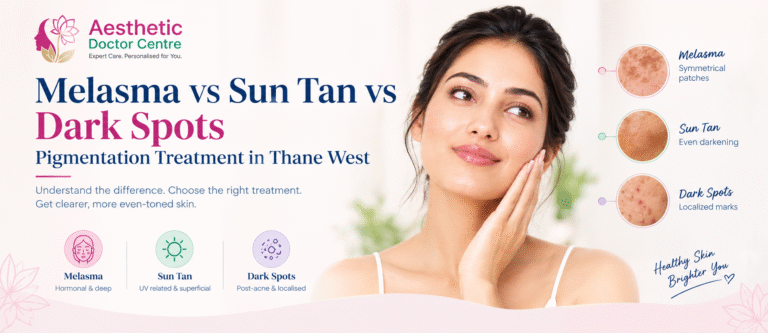
Melasma, sun tan, and dark spots all look similar, brown or discolored patches on the skin, but they form through different mechanisms and sit at different depths in the skin, which is why a single treatment approach doesn’t work for all three. Melasma is hormonally driven and highly sensitive to heat and light, sun tan is a temporary UV response that sits closer to the surface, and dark spots (post-inflammatory hyperpigmentation) result from healed injury or inflammation, like acne. Misdiagnosing the type of pigmentation is one of the main reasons at-home treatments or generic clinic protocols fail to deliver results.
Melasma typically appears as symmetrical, brown or grey-brown patches on the cheeks, forehead, upper lip, or chin, and is strongly linked to hormonal factors like pregnancy, birth control, or hormone therapy. It’s also aggravated by heat and sun exposure, which is why melasma often worsens in summer or after prolonged outdoor activity, even with sunscreen use.
Melasma sits deeper in the skin than sun tan and is notably more reactive to aggressive treatment. Using strong chemical peels or high-intensity lasers on melasma can trigger post-inflammatory pigmentation, actually making the condition worse instead of better. This is why melasma treatment in Thane typically follows a slower, more cautious protocol compared to treating simple sun tan.
Sun tan is the skin’s protective response to ultraviolet (UV) exposure, where melanin production increases to help shield deeper skin layers from further UV damage. Unlike melasma, tan is generally uniform across sun-exposed areas like the face, neck, and arms, and it sits closer to the skin’s surface, which makes it more responsive to standard exfoliating treatments.
Sun tan removal treatment in Thane West typically responds well to chemical peels, brightening facials, and topical vitamin C or antioxidant serums, since tan is more superficial than melasma or deep hyperpigmentation. Because tan is temporary and tied directly to recent sun exposure, results are often faster and more predictable compared to melasma or long-standing dark spots.
Dark spots, medically known as post-inflammatory hyperpigmentation, form after the skin experiences inflammation or injury, most commonly from acne, but also from cuts, burns, or other skin trauma. These spots are typically flat, localized to where the original injury occurred, and don’t follow the symmetrical pattern seen in melasma.
Dark spot removal treatment in Thane West usually combines a chemical peel or topical brightening treatment with consistent sun protection, since dark spots can darken further with UV exposure during the healing process. Dark spots from acne marks often respond faster to treatment than melasma, since they’re typically more superficial and not linked to an ongoing hormonal trigger.
Factor | Melasma | Sun Tan | Dark Spots |
Main cause | Hormonal factors, aggravated by heat/sun | Direct UV exposure | Post-inflammatory (acne, injury) |
Typical appearance | Symmetrical brown/grey patches | Even, widespread darkening | Flat, localized spots |
Depth in skin | Deeper, more resistant | Superficial | Superficial to moderate |
Best treatment approach | Cautious, gradual (tranexamic acid, gentle peels) | Standard peels, brightening facials | Peels, topical brightening agents |
Risk of worsening with aggressive treatment | High | Low | Moderate |
Typical recovery pattern | Slow, prone to recurrence | Fast, temporary | Gradual, fades with treatment |
Laser toning using a Q-switch laser is commonly used for pigmentation in Thane West, particularly for dark spots and certain types of sun damage, since it targets excess melanin with short pulses of energy that break the pigment down for the body to clear naturally. Q-switch laser treatment for melasma requires particular caution, as incorrect settings or overly aggressive sessions can worsen melasma rather than improve it, which is why melasma cases typically need lower energy settings and closer monitoring than sun tan or simple dark spots.
Q-switch laser works by delivering extremely short bursts of energy that target pigment specifically, minimizing heat spread to surrounding tissue compared to some other laser types, which is part of why it’s a commonly used option for pigmentation concerns. A proper skin assessment before treatment is essential to determine whether laser toning is appropriate for your specific type and depth of pigmentation.
Skin lightening treatment in Thane generally refers to treatments aimed at evening out skin tone and fading pigmented patches, rather than permanently altering a person’s natural skin color. This distinction matters because skin lightening in a medical, dermatological context is about treating specific pigmentation concerns, melasma, sun tan, or dark spots, not changing baseline skin tone.
When choosing a hyperpigmentation clinic in Thane West, the most important factor is whether the clinic properly diagnoses the type of pigmentation before recommending treatment, rather than applying the same protocol to every patient. Given how differently melasma, sun tan, and dark spots respond to treatment, an accurate diagnosis is the foundation of an effective plan.
According to guidance published by the American Academy of Dermatology, daily broad-spectrum sunscreen use is one of the most effective ways to prevent pigmentation from worsening and to support the results of any professional treatment.
How can I tell if I have melasma or just sun tan? Melasma typically appears as symmetrical patches on both sides of the face, particularly the cheeks and forehead, and tends to persist or worsen with heat and hormonal changes. Sun tan is usually more uniform across exposed skin and fades on its own once sun exposure decreases, unlike melasma.
Why does melasma keep coming back after treatment? Melasma is triggered by hormonal factors and sun exposure, both of which can persist long after a treatment course ends, which is why it often recurs without ongoing sun protection and maintenance. It’s generally treated as an ongoing condition rather than a one-time fix.
Is laser treatment safe for melasma? Laser treatment can be used for melasma, but it requires lower energy settings and more cautious protocols than for sun tan or dark spots, since aggressive laser treatment can worsen melasma. A proper skin assessment is essential before starting.
How long does dark spot removal treatment take? Dark spots from acne or minor injury often show improvement within a few weeks to a couple of months with consistent treatment, generally faster than melasma, since they aren’t tied to an ongoing hormonal trigger.
Can I treat pigmentation with over-the-counter creams alone? Over-the-counter creams can help with very mild, recent pigmentation, but melasma and deeper or long-standing dark spots typically need in-clinic treatment for faster, more complete results.
Does tranexamic acid work for all types of pigmentation? Tranexamic acid is primarily used for melasma, since it targets the specific pathway involved in melasma’s hormonal trigger, and is generally less necessary for simple sun tan or minor post-acne dark spots.
How important is sunscreen for pigmentation treatment? Sunscreen is essential for all three types of pigmentation, since UV exposure can worsen existing pigmentation and trigger new discoloration during the healing process after treatment.




Acne scar treatment Acne treatment Advanced skin treatment specialist Aesthetic clinic Aesthetic Dermatologist Aesthetic Doctor Centre Aesthetic physician Best Skin Doctor in Thane Botox treatment Chemical peel clinic Chemical peel for acne scars Chemical peel for pigmentation Chemical peels Chemical peels for acne scars Chemical peels for pigmentation Chemical peel treatment Cosmetic Clinic Cosmetic dermatology Cosmetic dermatology expert Cosmetic skin specialist Dermal fillers General dermatology Glycolic acid peel Glycolic peel benefits Hair Fall Consultation Hair fall treatment Hair loss treatment Hair regrowth treatment Hair thinning treatment Hydrafacial treatment Laser skin resurfacing Laser skin treatment Melasma treatment Pigmentation Clinic Pigmentation treatment PRP for Hair Loss PRP hair treatment PRP treatment for hair Salicylic acid peel Salicylic acid peel benefits Skin Clinic Skin Consultation Skin rejuvenation Skin resurfacing Skin Treatment
Book your Appointment