
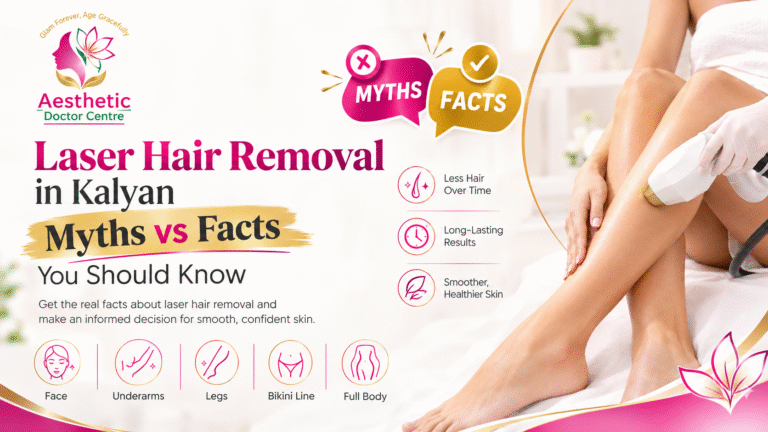
Laser hair removal in Kalyan does not deliver permanent hair removal in a single sitting — it delivers permanent hair reduction through a series of sessions, and most of what circulates about “one-time” results or “no side effects” is simply not accurate. If you’re researching this treatment for your face, underarms, or full body, separating myth from fact before booking a consultation will save you money, time, and disappointment.
This guide walks through the most common claims people believe about laser hair removal and explains what’s actually supported by clinical evidence, so you can make an informed decision.
This is the single biggest misconception people carry into their first consultation. Hair grows in cycles, and a laser can only disable a follicle when the hair inside it is in its active growth phase. Since not all your hair follicles are in that phase at the same time, one session can never catch everything.
Fact: Regulatory bodies approve laser devices for “permanent hair reduction,” not permanent removal, and most patients need 6 to 8 sessions spaced 4 to 8 weeks apart to achieve optimal results, with the exact number depending on the treatment area, hair type, skin tone, and individual factors. Hormonally driven areas typically need more sessions than others.
Older laser technology struggled with darker skin tones because it couldn’t reliably distinguish between melanin in the hair and melanin in the surrounding skin, raising the risk of burns or pigmentation changes. That history is where this myth comes from, and it still influences how people in Kalyan evaluate clinics today.
Fact: Modern lasers, when selected and calibrated by a trained practitioner, can safely treat a wide range of skin tones. The deciding factor isn’t skin color alone — it’s whether the clinic uses the right wavelength and settings for that individual’s skin and hair combination. This is exactly why choosing a qualified aesthetic professional matters more than choosing the cheapest package.
Some patients assume that if a clinic recommends more than 4–5 sessions, they’re being oversold. In reality, the number of sessions needed is a biological reality, not a sales tactic.
Fact: Hormonally sensitive areas such as the face, underarms, and bikini line generally require more sessions than the legs or arms because hair regrowth in these zones is influenced by hormones, not just the growth cycle. A clinic that gives you an honest, area-specific session estimate during consultation is following clinical best practice, not padding a bill.
The word “laser” combined with skin makes people expect intense pain, and this fear stops many from ever booking a consultation.
Fact: Most patients describe the sensation as a mild snap or warm pinch rather than severe pain, and modern devices typically include cooling mechanisms that reduce discomfort during treatment. Sensitivity does vary by area — the upper lip and bikini line tend to feel more sensitive than the arms or legs — but it is not comparable to waxing pain for most people, and it doesn’t require anesthesia for routine sessions.
Social media before-and-after photos often suggest a single, universal outcome. That’s misleading, because hair and skin biology varies significantly between individuals.
Fact: Laser hair removal works by targeting melanin in the hair shaft, which is why it’s traditionally most effective on darker, coarser hair. Clinical studies consistently show 80–95% reduction in treated hair after six to eight sessions, but very light, grey, or fine vellus hair responds less predictably because it contains less pigment for the laser to target. A qualified practitioner should assess your hair and skin type honestly before promising a specific outcome.
Many people assume that once the initial course is complete, hair is gone forever with no further effort required.
Fact: Dormant follicles can activate later due to hormonal shifts, aging, or other biological factors, which is why occasional maintenance sessions — usually once or twice a year — are recommended to keep results consistent over the long term. This is standard, expected maintenance, not a sign that the original treatment failed.
Marketing language sometimes implies a completely risk-free procedure, which isn’t accurate for any energy-based skin treatment.
Fact: The most common reactions are mild redness and temporary swelling around the treated follicles, which usually settle within a few hours to a couple of days. Less common risks include pigmentation changes or, rarely, blistering — usually linked to incorrect device settings or unsuitable candidacy, which is why a proper skin assessment before treatment matters. Sun protection before and after sessions also plays a meaningful role in reducing these risks.
Understanding the mechanism helps explain why the myths above don’t hold up. The laser emits a concentrated beam of light that is absorbed by melanin in the hair shaft. This light converts to heat, which damages the follicle enough to delay or prevent future hair growth, while sparing the surrounding skin when the device is used correctly. Because only follicles in the active growth phase are affected at any given time, repeat sessions are built into the process by design, not as an upsell.
Factor | Laser Hair Removal | Waxing |
Duration of results | Long-term reduction; occasional maintenance | Regrowth in 2–4 weeks |
Sessions needed | Typically 6–8 initial sessions | Ongoing, repeated every few weeks |
Discomfort | Mild snapping sensation, cooling assists comfort | Sharp pain during hair removal |
Skin impact | Minimal irritation when done correctly | Can cause ingrown hairs, redness |
Cost over time | Higher upfront, lower long-term cost | Lower upfront, recurring cost adds up |
Best suited for | Those wanting long-term reduction | Those wanting an immediate, low-commitment option |
Laser hair removal isn’t automatically suitable for every situation. It’s worth having a proper consultation, rather than booking directly, if you:
A qualified aesthetic practitioner can assess these factors individually rather than applying a one-size-fits-all protocol.
Is laser hair removal actually permanent? No. It provides long-term, permanent hair reduction, not complete removal. Most people see a significant, lasting decrease in hair growth after a full course, though occasional maintenance sessions help sustain results over the years.
How many sessions will I need in Kalyan? Most clients need 6 to 8 sessions for non-hormonal areas like the legs and arms, while hormonally driven areas such as the face or bikini line often need more. Your practitioner should confirm this during a consultation based on your hair and skin type.
Does laser hair removal hurt? Most people describe it as a mild snapping or warm sensation rather than significant pain. Sensitivity varies by treatment area, and cooling technology is typically used to improve comfort.
Can men get laser hair removal too? Yes. It’s commonly used by men for the back, chest, beard shaping, and other areas, using the same principles and session structure as treatment for women.
Is it safe for all skin tones? When performed with appropriately selected devices and settings by a trained practitioner, it can be used safely across a range of skin tones. Skin tone assessment during consultation is essential to reduce risk.
Will hair grow back after treatment? Some regrowth is normal over time as dormant follicles activate due to hormonal changes or aging. This is why occasional maintenance sessions, rather than a single course, sustain results long-term.
Laser hair removal is a well-established, evidence-backed option for long-term hair reduction, but it works best when expectations are realistic and the provider is properly qualified to assess your skin and hair type individually. If you’re in Kalyan and want a personalized assessment rather than a generic package, a consultation with an aesthetic medicine specialist is the right starting point before committing to a treatment plan.
Dr. Jyoti Ghindani, MS Ophthalmology and Fellow in Aesthetic Medicine & Trichology, specialises in facial injectables, hair restoration, and anti-aging therapies, bringing surgical precision to aesthetic procedures. You can book a consultation for laser hair removal or learn more about our aesthetic medicine services to discuss a session plan suited to your skin and hair type.
For further reading on how regulatory bodies define these treatments, see the U.S. FDA’s consumer guidance on laser hair removal and peer-reviewed research available via PubMed/NCBI.




Acne scar treatment Acne treatment Advanced skin treatment specialist Aesthetic clinic Aesthetic Dermatologist Aesthetic Doctor Centre Aesthetic physician Best cosmetic clinic Botox treatment Chemical peel clinic Chemical peel cost Chemical peel for pigmentation Chemical peels Chemical peels for acne scars Chemical peels for pigmentation Chemical peel treatment Cosmetic Clinic Cosmetic dermatology Cosmetic dermatology expert Cosmetic procedures Cosmetic skin specialist Dermal fillers Dr Jyoti Ghindani General dermatology Glycolic peel Hair fall treatment Hair loss treatment Hair regrowth treatment Hair thinning treatment Hydrafacial treatment Laser skin resurfacing Laser skin treatment Melasma treatment Pigmentation Clinic Pigmentation treatment PRP hair treatment PRP treatment for hair Salicylic acid peel Skin Care Tips Skin Clinic Skin peeling treatment Skin rejuvenation Skin resurfacing Skin Treatment TCA peel
Book your Appointment